I agree with getting the height of a suspension seatpost right - it sags over time so if I stayed sitting down too long, it would be too low, and so I'd have to stand up, let the seatpost come back up.
I definitely was in the seat a lot longer and more when I had a suspension seatpost. The bf said "the good thing about those seats is that they teach you to stay in your seat, and the bad thing about those seats is that they teach you to stay in your seat..." It did make bouncier sections easy enough for me to just ride sitting down, but in some ways that discourage getting more skills of standing up out of my seat or moving my position on the bike depending on what I was doing. If I was going down a bumpy downhill, I could just sit in the seat - whereas, if it was uncomfortable sitting in the seat, I'd have straightened my legs and caught on to putting my weight backwards downhill a lot sooner.
Interesting and informative discussion, thanks! I am not making any decisions until after the clinic - including in whether to get a mountain bike this year or next springAs much as I want to do this, I also know that I only have 2,000 miles under my belt and that isn't very much - so will just have to see how it goes at the clinic.
Thanks again!
I've been told my Gunnar could handle non-technical beginner mountain bike trails quite well - but I am not about to take my expensive custom steel beauty on a mountain bike trail - I believe in having the "right horse for the course" as someone else said here in another thread. I would, however, take her on limestone![]()
If you ride on difficult terrain, it will help by swallowing bumps, thereby adding more traction and of course making your ride smoother. While a suspension can swallow a lot of pedaling power when riding on smooth asphalt, it helps a lot going uphills on loose gravel or rocky terrain by providing more traction. Going downhill, it's often better to get out of the seat for a variety of reasons - you can shift your weight to avoid going over the handlebars, jump over roots or use your feet as suspension for instance - so a seatpost-suspension won't work. If you don't have great biking skills, a full suspension bike will help to ride more difficult trails. If you already have great bike handling skills it will swallow some of the impact when jumping for instance.
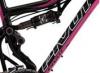
When you look at common rear suspensions you will see that they are built in a way that gives the rear wheel the possibility to move separately from the frame itself while absorbing the occurring forces. Therefore, a rear suspension works whether you stand on your pedals or sit on your saddle and helps to keep your rear wheel on the ground when the trail gets bumpy. This can't be provided by a seatpost-suspension.
Last edited by Susan; 04-05-2011 at 08:34 AM.