Reply With Quote
This particular sentence really outlines how ridiculous the whole proposition/article is and makes me seriously doubt the knowledge of the writer.Originally Posted by Biciclista

Pearl Street mall is an outdoor pedestrian mall/thoroughfare. While it's wide enough to be a road it's FAR FAR from it. Yes, bicycle traffic is banned, but so is ALL vehicle traffic, rollerblades, skateboards, etc. That's like citing the fact that bikes are banned inside a private traditional mall as evidence that authority to ban them from public roadways is valid. Absurd!
Welcome guest, is this your first visit? Click the "Create Account" button now to join.


Results 1 to 15 of 32
Thread: bicycles banned in Colorado?
-
07-28-2009, 07:52 PM #1
 I LIKE BIKES
- Join Date
- Sep 2008
- Location
- Beautiful NW or Left Coast
- Posts
- 5,619
bicycles banned in Colorado?
To disable ads, please log-in.
http://bicyclecolo.org/page.cfm?PageID=1042
http://www.denverpost.com/search/ci_12915973
Jeffco seeks to redirect bicyclists
A proposal would let all counties have the ability to ban bikes on certain roads.
By Heath Urie
Daily Camera
POSTED: 07/26/2009 01:00:00 AM MDT
Colorado cycling groups are on edge about a proposal floated by Jefferson County commissioners that could give all counties the authority to ban bicyclists from certain roads.
The controversy began late last month when the three Jeffco commissioners denied a special-event permit for a September charity ride planned for the county's Deer Creek Canyon Road.
The ride would have attracted an estimated 1,500 riders, according to county officials, and wound through Conifer, Morrison, Evergreen and Indian Hills.
But after hearing from dozens of mountain-area residents — who officials say are growing concerned about the increasing conflict between cyclists and motorists on the winding, narrow canyon roads — the commission voted 2-1 against allowing the event.
During their deliberations, commissioners said they're working with the county attorney's office to come up with a plan to lobby state lawmakers to extend the authority to regulate bicycle use to all counties.
Most municipalities have the authority to ban cycling on specific roads, which has happened on Boulder's Pearl Street Mall, but counties do not.
"There is a growing, serious issue of safety between bicyclists and the motoring public," Jeffco Commissioner Kevin McCasky said last week. "Certain roads appear not to be safe to mix the two."
McCasky, who voted in favor of allowing the charity ride last month, said Jeffco doesn't have plans to ban cycling on any roads — but he does think counties should have the authority to do so when conditions become too dangerous.
Some motorists say a newly passed state law, which goes into effect Aug. 4, creates dangerous situations on mountain roads because cars are required to give riders three feet of space when passing. Riders are also allowed to ride in the middle of lanes, if the shoulders are unsafe.
Dan Grunig, executive director of Bicycle Colorado, said expanding "bike-ban authority" goes too far.
"I believe the commissioners in Jeffco when they say they are not interested in banning bikes," Grunig said. "But I don't know who their successors are, and I don't know who the commissioners are in the other 63 counties. We're watching it very closely."
Grunig said there's a very good reason why counties don't have that kind of authority.
"In a county setting, you have many roads that are cross-state roads and cross-county roads where there aren't alternative routes for miles," he said. In cities, he said, nearby paths and side streets can serve as easy detours around dangerous roads.I like Bikes - Mimi
Watercolor Blog
Davidson Custom Bike - Cavaletta
Dahon 2009 Sport - Luna
Old Raleigh Mixte - Mitzi
-
07-28-2009, 09:00 PM #2
Registered User
- Join Date
- Feb 2009
- Location
- Boulder
- Posts
- 589
-
07-29-2009, 12:09 AM #3
Just cyclist not linguist
- Join Date
- Mar 2009
- Location
- Belgium
- Posts
- 931
Even in a bike loving countries like Belgium and The Netherlands you can't ride in every street. Very busy roads are mostly forbidden for cyclists.
My cycling hero: http://www.cyclinghalloffame.com/rid...asp?rider_id=1
-
07-29-2009, 03:06 AM #4
Head up. Shoulders down.
- Join Date
- Jul 2006
- Location
- Looking at all the love there that's sleeping
- Posts
- 4,171
You can't ride bicycles on interstate, limited access highways in the U.S., either. Originally Posted by papaver
Banning bicycles vs. denying a special use permit are two completely different issues.
It's this sentence that is the most confusing:
"During their deliberations, commissioners said they're working with the county attorney's office to come up with a plan to lobby state lawmakers to extend the authority to regulate bicycle use to all counties."
If JeffCo already has the authority to deny a permit - which, in effect, banned those bicycles from the road for this particular event, I would imagine other counties already have similar authority.
I don't see the point of this proposed plan and agree with Mr. Grunig.
-
07-29-2009, 03:38 AM #5
Corgi Prime
- Join Date
- Nov 2006
- Location
- Memphis, TN
- Posts
- 996
I can tell you from personal experience that as long as the law isn't abused by cyclist-hating lawmakers, it shouldn't impact roads you'd normally ride on. We have a major road in Memphis that runs through a large city park and has a section that's closed to bikes. It's busy enough and traffic moves fast enough that you'd really have no business riding a bike on it, but the fact that it goes through a large park and that it's a main artery to get into the east side of the city would be enough to draw some people try if it didn't have a sign saying that you're not allowed to ride a bike there.
Key phrase here being "as long as it's not abused"
-
07-29-2009, 04:42 AM #6
In-app purchases
- Join Date
- Sep 2007
- Location
- Uncanny Valley
- Posts
- 14,498
Bicycles are permitted on (parts of?) interstate 70 in Colorado. Originally Posted by 7rider
There are some areas where the terrain means there's only one road.
The thread title does seem a bit alarmist, but it's a real issue, just as motorcyclists have been experiencing for years now.
I think a better way to resolve it would be by strict enforcement of minimum speed laws rather than banning certain classes of vehicles. A car doing 40 mph on the interstate is more dangerous to everyone than a bicycle on the shoulder of the same interstate - and yet I've never, ever seen or heard of someone being ticketed for going below the minimum speed. (Yes, it probably happens, and I'm sure someone on this board will chime in, but I've never seen it happening, and I've seen a lot of tickets written (and received my share ) for exceeding the posted speed limit by a whole lot less than 30 mph.
If a vehicle can't maintain a constant speed of 70 mph, or 65 or whatever your local limit happens to be, then it needs to stay off the interstate (except where there are designated lanes for slower traffic, such as the bicycle lanes on I-70 or the truck hill-climbing lanes in many mountain regions).
Mixed-use roads need to be open to all vehicle users regardless of speed. (Are they going to ban farm vehicles from the roads in question, too?)
That's a lot more relevant and effective than banning vehicles based on the nature of their propulsion.
I hope that LAB is fighting this on a national level, as the AMA has been doing with the motorcycle bans. Almost all roads receive some share of federal funding.
Edit: already partially in place.* "The Secretary shall not approve any project or take any regulatory action under this title that will result in the severance of an existing major route or have significant adverse impact on the safety for nonmotorized transportation traffic and light motorcycles, unless such project or regulatory action provides for a reasonable alternate route or such a route exists." (23 U.S.C. 109(m))
Last edited by OakLeaf; 07-29-2009 at 05:00 AM.
Speed comes from what you put behind you. - Judi Ketteler
-
07-29-2009, 04:46 AM #7
Ain't Love a Surprise?
- Join Date
- Nov 2005
- Location
- Between the Blue Ridge and the Chesapeake Bay
- Posts
- 5,203
Interstate riding depends on the state. I've ridden for 13 miles on I-10 in Arizona, although I don't recommend it. I've seen cyclists on the interstates in New Mexico, too.
I've never been to Colorado, so I can't comment specifically. But around here, the cycling groups are very careful to ride in small, single file groups so as not to antagonize motorists. We want to be safe and welcomed. I just wonder if their are large groups of cyclists in Colorado who actually do block the roads. Anyone?
-
07-29-2009, 05:09 AM #8
Considering it all joy
- Join Date
- Jul 2007
- Location
- Bothell area, WA
- Posts
- 564
I don't know about other states, but here's a map showing where bikes are NOT allowed on interstates in Washington state: Google map. The interesting thing to me is how much of major freeways are, in fact, open to bicyclists if they so desire.
On the closing certain roads to cyclists: It seems like the issue is more the conflict between bikes and cars that needs to be addressed in general, rather than banning bikes from particular roads. Bicyclists need to use common sense to not put themselves in unduly dangerous situations and to be courteous to faster-moving vehicles; but drivers also should realize that bicyclists have the same rights and responsibilities as a driver -- and that should include the option to use all roads. Whether or not a bicyclists chooses to exercise that right on particular roads is a matter of common sense for the rider.
-
07-29-2009, 05:48 AM #9
Registered User
- Join Date
- Jun 2008
- Location
- Michigan
- Posts
- 865
Yes, I was in Aspen one summer and large groups of cyclists blocked a twisting winding road. It was obviously an elite group training, and I tried to see if there was anyone famous, but they would not get single file or two by two. I had mixed feelings about it at the time. Originally Posted by tulip
-
07-29-2009, 05:41 PM #10
f/k/a Mr. S.
- Join Date
- Dec 2006
- Location
- Blessed to be all over the place!
- Posts
- 3,433
As long as it's well marked with restrictions approved in an open "due process" with well defined guidelines, I agree that this should be OK.
Using Andrea's example in Memphis, there are other convenient and safer routes for a cyclist. In addition, if it's the same one I'm thinking of, it's also confusing enough for cars with lanes that change direction based on the time of day. It would be fool hardy for a cyclist to stubbornly exercise their right there.If you don't grow where you're planted, you'll never BLOOM - Will Rogers
-
07-29-2009, 06:12 PM #11
droppin' off the back
- Join Date
- Aug 2008
- Location
- St. Louis, MO
- Posts
- 1,058
I just got back from Boulder on vacation. The trip started with a heated discussion with the in-laws while DRIVING about cyclists on the road. I was surprised to see this hostility in Colorado--I thought it would be a bike friendly place--but I sensed tension.
Cycling in Colorado is VERY popular, and for many cyclists, their only mode of transportation. I rode around with my head hanging out the window like a puppy dog, trying to take in all the different bicycle makes, models and jerseys.
A road outside Lyons is being repaved. As a result, a three-lane road is now a two-lane road with no shoulder. There were numerous construction signs, saying "No bicycles" and "bicycle detour" well before this section of road (that was a new one!). However, by BIL encountered a cyclist recently and he had to slow and ride behind him for quite some time, resulting a over a 1/2 mile-long back up. When BIL finally got an opportunity to pass, the cyclists flipped him off (BIL's version). Now if this is a true story, the cyclists was in the wrong, by riding on a busy road with no shoulder that was specifically designated "construction, no bicycles"--with detours clearly posted. However, if you LIVE on this road and this is your sole mode of transportation, I can see the cyclists frustration.
Of course, BIL didn't understand why the cyclist didn't ride on the part of the road under construction, which looked like the equivalent of the rumble strips on the side on highways. We explained that wasn't practical, and the cyclist has a right to the road--BUT can they post, "No Bicycles"? Good question..........
As a tax payer, I have issues with being restricted from public-use roads--however, apparently in Colorado, if you don't own a car, you aren't contributing to maintaining the roads? (I don't know if that's true, but an interesting thing to research)
We took time to explain that we DO ride on the road at home, but not long stretches without shoulders. And that cyclists do have a right to be on the road--reminding them that it could be their FAMILY on that bicycle, which seemed to make them think a little.
Can anyone from this area explain? Solo? Martian?Last edited by TrekTheKaty; 07-29-2009 at 06:18 PM.
"Well-behaved women seldom make history." --Laurel Thatcher Ulrich
'09 Trek WSD 2.1 with a Brooks B-68 saddle
'11 Trek WSD Madone 5.2 with Brooks B-17
-
07-29-2009, 06:48 PM #12
Registered User
- Join Date
- Sep 2001
- Location
- Lakewood, Co
- Posts
- 1,061
Most of the motorists in Colorado are very friendly to cyclists. The problem is, here in Jefferson County and other mountainous areas of Colorado there are no other routes. These roads are narrow, windy, long climbs with no shoulders. Put 2,000 cyclist on them with cars and there are issues. Motorists are in a hurry and drive way to fast, cyclist slow them down and refuse to share the road.
On rides that attract a large number many cyclists think they own the road and will not give the right of way to cars. Motorists believe cyclists have no right on the roads.
I have toured much of this country, mostly in the midwest and east have been appalled at the behavior of cyclists that I have seen here so it's no wonder motorists get frustrated. Throughout the summer many large organized rides go through the same small towns year after year and impede traffic. The motorist get frustrated at the violations they see from the cyclists. The highway patrol tries to warn the cyclists but they pay no attention. I don't know if these cyclists are residents of Colorado or tourists. Plus, this state attracts many tourists who come here for the challenge of riding the kind of terrain we have here and I think they forget they have to obey traffic laws.
If any legislative action takes place it will take a state lawmaker to propose it, nothing will happen until 2010. Bicycle Colorado is promoting education and safety vs. bans. Shoulders on these roads will make them safer for everyone including motorists. Riding single file when there is traffic or 2 abreast when there is none will help the flow of traffic.
In Colorado, as in most states, property taxes maintain county roads, not gasoline taxes, so cyclists have just a much a right to the roads as motorists. In the Denver area when there is construction and it affects a bike route there is a detour for the cyclists. And, yes, we do have areas that are not considered safe and an alternative route is designated for the cyclist. One is near where I live and even though it is a sidewalk it is much safer than trying to climb the hill with limited visibility and a whole line of traffic behind me.
In Colorado cyclists are only permitted on interstates if there is no other route. This is very common in Western states. Generally shoulders are very wide and traffic isn't much of a concern.
Bicycle Colorado is a very strong advocate group for cyclists in Colorado and I'm sure they will get this worked out in a reasonable manner.
-
07-29-2009, 07:07 PM #13
Godiva's mom
- Join Date
- Oct 2006
- Location
- Reporting from Moonshine Mountain
- Posts
- 1,327
I live in VA but ride in CO every year. I ride out of Denver & I sense that most of the hostility is more up toward Boulder. I rode quite a bit in Jeffco this summer and did not have one bit of trouble. One day I was on some narrow canyon roads, too (don't know the route number but I am referring to the road that goes from Morrison by Red Rocks). I rode through Golden to Red Rocks and from there to Kerr Gulch Rd., then took that to Bergen Park. You locals should know what I am talking about.
From Bergen Park I took I-70 to the next exit (Chief Hosa) & the frontage road down and then back to Golden...and back to Denver.
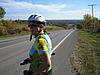
Regarding riding on I-70, the attached picture is me riding on I-70 toward Loveland Pass just a couple weeks ago."When I'm on my bike I forget about things like age. I just have fun." Kathy Sessler
2006 Independent Fabrication Custom Ti Crown Jewel (Road, though she has been known to go just about anywhere)/Specialized Jett
-
07-29-2009, 08:07 PM #14
Registered User
- Join Date
- Sep 2001
- Location
- Lakewood, Co
- Posts
- 1,061
Many of these roads are used for training rides by local clubs and are heavily used on weekends and evenings. I don't think the problem is as bad on weekdays.
-
07-29-2009, 09:33 PM #15
Registered User
- Join Date
- Jul 2008
- Posts
- 6
I live about 40 miles north of Boulder/Lyons. Up here, the problem is if you want to travel any kind of distance (say commute from one town to another 15-20 miles away) all of our roads that go anywhere are two lane roads with no shoulders. The speed limits on these roads range from 40-55 MPH, but I don't think anyone observes the 40ish limits. I don't personally have the nerve (yet? I hope) to try my luck with riding in the wild, but as a driver, the cyclists on our roads terrify me. The county roads that connect our towns are not so heavily traveled that it's impossible to veer around them, but there are times that you do have to follow someone for a little way before oncoming traffic opens up, and God help the driver of the car the waits until they feel they can pass safely against all the people piling up behind her, not to mention the cyclist herself. Originally Posted by TrekTheKaty
I can't imagine it would ever happen, because of the expense, but I wish they could build parallel cycleways, actually offset from the main road, to allow everyone to travel more safely. I think putting up "Share the Road" signs on busy roads that don't have room for both kinds of traffic just invites resentment.