Reply With Quote
http://www.flickr.com/photos/gcziko/...7594104077802/
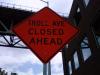
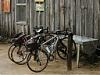
Here's a photo essay of safety hazards on our bike path system. (By the way, at least here, doing this gets noticed by planners & powers that be.)
Some of these photos would still be considered almost bucolic to someone drivingt by. Happy people meandering to their destinations! It's a totally different feeling when you're on your bike actually trying to *get* somewhere.
Welcome guest, is this your first visit? Click the "Create Account" button now to join.


Results 31 to 45 of 73
-
03-08-2008, 07:18 AM #31
 Of sky 'n earth
- Join Date
- Nov 2007
- Location
- Western Canada-prairies, mountain & ocean
- Posts
- 6,984
To disable ads, please log-in.
If a person lives in an area where cycling routes have not been suggested/promoted to people living locally, then it may require helping a person to rethink their streets . Sometimes it's a just an extra 2-3 blocks away to just to remove oneself from high volume fast car routes. Originally Posted by Trek420

-
03-08-2008, 07:35 AM #32
Sue
- Join Date
- Jun 2005
- Location
- Illinois
- Posts
- 3,151
-
03-08-2008, 08:01 AM #33
Now in the PNW
- Join Date
- Jun 2002
- Location
- Mrs. KnottedYet
- Posts
- 9,152
Yes! Maybe they are minty tennis balls for dogs Originally Posted by SouthernBelle
 You know, chased by a dog, reach down into your wheel, grab a tennis ball, throw it to the dog
  Fancy Schmancy Custom Road bike ~ Mondonico Futura Legero
Found on side of the road bike ~ Motobecane Mixte
Gravel bike ~ Salsa Vaya
Favorite bike ~ Soma Buena Vista mixte
Folder ~ Brompton
N+1 ~ My seat on the Rover recumbent tandem
https://www.instagram.com/pugsley_adventuredog/
-
03-09-2008, 12:44 PM #34
Yes I Can
- Join Date
- Feb 2006
- Location
- Western Massachusetts
- Posts
- 352
Cycling on the sidewalk here is prohibited (as it is elsewhere) but I can understand why some people feel safer on the sidewalk. I live on a side street a stone's throw from the downtown area. Not everyone on this street has off-street parking so the street is lined with cars. That's forcing the cyclist to ride way too close to passing cars (and way too many drivers think that this street is a practice stretch for Indy or NASCAR.) Now with the potholes (some I've not so lovingly named "Jaws"
) and the general disrepair of roads that emerge after a snowy/icy winter, many still sporting icy slush, I fear for some of the cyclists I do see on the road. That being said, I do understand the safety concerns for cyclists and pedestrians on sidewalks.
I've never seen the tennis balls on spokes either.
I'm a Dog on a Mission! The human & I are doing Woofstock again this year!
-
03-09-2008, 01:20 PM #35
Registered User
- Join Date
- Dec 2005
- Location
- WA State
- Posts
- 4,364
ummmmm how does one put a tennis ball on ones spokes and have it actually fit through the fork...... I don't think I have that kind of clearance on any of my bikes - not even my cross bike.... Originally Posted by SouthernBelle
"Sharing the road means getting along, not getting ahead" - 1994 Washington State Driver's Guide
visit my flickr stream http://flic.kr/ps/MMu5N
-
03-09-2008, 01:25 PM #36
Now in the PNW
- Join Date
- Jun 2002
- Location
- Mrs. KnottedYet
- Posts
- 9,152
We're talking mountain bikes, usually box store bikes. OK, next time I see one I'll take a picture or better yet ask the rider "why you doing this?"
Fancy Schmancy Custom Road bike ~ Mondonico Futura Legero
Found on side of the road bike ~ Motobecane Mixte
Gravel bike ~ Salsa Vaya
Favorite bike ~ Soma Buena Vista mixte
Folder ~ Brompton
N+1 ~ My seat on the Rover recumbent tandem
https://www.instagram.com/pugsley_adventuredog/
-
03-09-2008, 01:34 PM #37
Registered User
- Join Date
- Dec 2005
- Location
- WA State
- Posts
- 4,364
ahhhh - yes you could fit a tennis ball through a suspension fork. Maybe its like putting beads on the spokes of your kiddie bike? Do they fly out to the rim when the wheel is turning? Originally Posted by Trek420
"Sharing the road means getting along, not getting ahead" - 1994 Washington State Driver's Guide
visit my flickr stream http://flic.kr/ps/MMu5N
-
03-09-2008, 09:03 PM #38
renouncing weeniedom
- Join Date
- Sep 2007
- Location
- orygun
- Posts
- 1,145
I fear i've stumbled upon that place where I don't know what it is I don't know...
Can I gather from this thread that bikes belong on the road...not on sidewalks... bit not on mixed use paths either?
And I sense an impatience with those who venture out into the road without boldness.
I want to be "enlightened"......
And is this related to the argument about whether or not there should be dedicated bike lanes vs cyclists should gain the skills to claim rights to the same road as cars?Last edited by elk; 03-09-2008 at 09:07 PM.
Discipline is remembering what you want.
-
03-09-2008, 09:23 PM #39
Registered User
- Join Date
- Dec 2005
- Location
- WA State
- Posts
- 4,364
If you are referring to Geonz's post about the dangers of bike paths, I don't think she is arguing that bikes don't belong on mixed use paths, but rather that one should not feel safe just because you are on a path and not the road. Often those paths are so poorly designed that they pose more of a danger to users than good vehicular use of the roads. Bike lanes also have to be well desiged or they can be more dangerous used than not. Around here we have way too many bikes lanes with parking on the right - riding in the bike lane puts you squarely in the door zone..... not good. I'm happy to use bike facilities when they exist, but only if they are well designed, safe and actually go where I'm headed. I'm also not afraid of riding in traffic and being assertive about claiming my rights to be on the road. Originally Posted by elk
You are probably right that you sense some impatience with people who do venture out on the roads without boldness though. People who are very meek about traffic can make it worse for the rest of us... If motorists begin to expect that bicycles are going to hug the curb or are going to use cross walks rather than make a left by using the left turn lane that's bad. I can probably dig up some vitriolic threads from a local forum arguing about the exact meaning of our traffic laws and whether or not cyclists are obligated to get out of the way of motorists and just how far to the right is reasonable...."Sharing the road means getting along, not getting ahead" - 1994 Washington State Driver's Guide
visit my flickr stream http://flic.kr/ps/MMu5N
-
03-09-2008, 09:59 PM #40
renouncing weeniedom
- Join Date
- Sep 2007
- Location
- orygun
- Posts
- 1,145
thanks, Eden. That helps.
Makes me think I otta take some kind of class or seminar or practicum on road riding...
Any suggestions about where to do that in Portland?Discipline is remembering what you want.
-
03-10-2008, 04:34 AM #41
A tooth shy of a sprocket
- Join Date
- May 2007
- Location
- Columbia, MO
- Posts
- 2,041
Try League of American Bicyclists. They list courses by state. Originally Posted by elk
-
03-10-2008, 05:09 AM #42
Slow and Steady
- Join Date
- Oct 2006
- Posts
- 1,057
And that is the crux of the problem. There is this spectrum of road riders from the overly meek and dangerous to the assertive to the overly aggressive and dangerous. Both ends of the spectrum make it hard on the middle ground assertive. Originally Posted by Eden
When DH and I first started riding he would freak out when I would pull into the left hand lane to turn. He was of the meek rider end of the spectrum and, I think, thought of me as I do the riders who run red lights. It took a long time to convince him that being assertive and making your intentions obvious to car drivers is not only right, but actually more polite.
-
03-10-2008, 06:07 AM #43
LCI # 1853-M
- Join Date
- Sep 2006
- Location
- Toltec, Arkansaw
- Posts
- 512
Sidewalks are for pedestrians, people who walk as a means of locomotion. Cyclists ride on the street, where they are usually safe from pedestrians. Originally Posted by elk
Pedestrians operate without rules, except for a general admonition not to jaywalk. They can change speed or direction (often both) in a single step, on a whim, without notice. Even when the cyclist tries to follow traffic laws on the street, the multi-use trails, bike paths, or even residential sidewalks, he/she/is stymied by the undisciplined hither-and-yon movement of pedestrians.
Mixing cyclists and pedestrians is about the most dangerous thing that traffic engineers can do. When riding in motor traffic, cyclists are generally safe at about the fastest speed the rider can go, but trying to ride among pedestrians is so hazardous that the “safe” speed is about 5 mph.
In most communities, it's illegal to ride on the sidewalks in the downtown areas or business districts for the same reason above. In residential areas it's usually legal, and sidewalk riding is recommended for small children until they're old enough and experienced enough to ride the street.
Bike lanes are a little different matter, intended to separate bikes from faster motorized traffic. In every state, bicyclists are recognized as drivers of vehicles, just the same as motorists, and bicycles are considered as part of "traffic" and normal users of the road. In essence, every traffic lane is also a bicycle lane, and you're entitled to ride there, with the expectation that you will abide by the appropriate traffic laws and regulations.
Cars are big, heavy, fast, and scary to cyclists protected only by their wits and a fraction of a millimeter of lycra fabric. So, many cyclists cling tenaciously to the sidewalks in spite of the pedestrian situation, or they'll ride along the streets only if there's a marked bike lane there.
In reality, bike lanes complicate the traffic situation, and create about as many problems as they attempt to solve - especially at intersections, where motorists turn across them - and at many intersections they encourage the cyclists to slip up on the right hand side where motorists usually aren't looking. In most cases, dedicated bike lanes will terminate some distance away from major intersections. In these cases cyclists are expected to merge into the traffic lane once the bike lane ends, and behave, well, like vehicles.
By and large, bike lanes have not been effective at providing real safety since the crash rates are essentially the same whether a bike lane is present or not. Bike lanes do have an undoubted psychological effect, because people believe they're safer. Both cyclists and motorists regard the solid white line delineating a bike lane as a "wall" between their traffic lanes. Cyclists think that motorists will never cross it to the right, and motorists think cyclists will never cross it to the left. In reality, the painted stripe merely provides the illusion of safety. People will cross that line when necessary, and the danger is that the unprepared motorist or cyclist can be caught unaware.
The division between facilities advocates (bike lane supporters) and vehicular cyclists (who believe cyclists should act and be treated as merely another vehicle on the road) is a fundamental disagreement about human nature. In very broad strokes, on one hand you have one group that tries to influence behavior through engineering, paint, and concrete. The interstate highway system is an excellent example of this approach. On the other hand, you have a separate, sometimes overlapping group that tries to change behavior through education and training. Driver's Ed and the League's Bike Ed programs are examples of this approach. The first group strongly advocates the painting and establishment of bike lanes wherever there’s room; the others acknowledge that under the law, every lane is a bike lane, and that we should teach motorists and cyclists alike to share the available facilities.
Both local advocacy groups and the League of American Bicyclists shamelessly play both sides of this fence, by advocating for bike paths wherever possible for those riders who simply will not venture out into the streets; by providing educational courses, classes, and outreach for those who pursue the vehicular cycling principle; and lobbying/litigating against those who would restrict cyclists’ rights and access to the public roads. It’s not being two-faced… It’s a simple realization that as cyclists we really have the best of both worlds.
Cyclists are unique, because we are the only highway users that have a choice. We can follow drivers’ rules on the roadway, or step to the side of the road and off the bike, and become pedestrians. And after a situation clears, we can check for a safe space in the traffic flow, hop back on the bike, and pedal off again.Last edited by PscyclePath; 03-10-2008 at 06:11 AM.
-
03-10-2008, 06:47 AM #44
Sue
- Join Date
- Jun 2005
- Location
- Illinois
- Posts
- 3,151
Eden pegged my point. Too often bike paths are touted as "the answer," and then they're poorly designed and not maintained, because the planners & executers do "more efficient" things for the rest of the traffic flow, since the bicycle stuff isn't considered as important. This means people don't use the facilities, because they aren't safe, and this means that there still aren't enough bicycle-riders to make it a priority. It's a self-perpetuating cycle unless and until other forces get involved. Be it known that I ride on a sidewalk everyday except when it's snowy (which has been the past month or so), because for that last 200 yards to the campus entrance, it is much safer, and I've seen at most 2 pedestrians on it at the same time. Since I'm making a right turn at the only road it meets, there are no conflicts. "It depends"

Most multi-use paths are a bit wider than sidewalks, so there's some room for more of that random pedestrian wandering... but we still had an injury last year when our little Saturday group was on the path and these four 10-year-olds were playing something like tag. They were in their own little world as they pelted at us in a weird Brownian-motion sort of way.
The plain old expense of separate paths is, I think, causing some lean towards "Complete Streets," which I find encouraging. At this point, bicycles as transportation are just perceived as less bizarre than even a few years ago, when bicyclists were supposed to be out meandering with their children (or training for the Tour de France... on some *other* road somewhere...)Last edited by Geonz; 03-10-2008 at 06:52 AM.
-
03-10-2008, 07:15 AM #45
A tooth shy of a sprocket
- Join Date
- May 2007
- Location
- Columbia, MO
- Posts
- 2,041
The biggest hazard to a cyclist riding on a sidewalk is the cars. Originally Posted by PscyclePath
Pedestrians and cyclists don't pose much threat to each other. The problem is when the sidewalk crosses an intersection, the traffic moving through the intersection isn't expecting something moving so fast. At a walk you can easily change direction or stop, anything faster, not so easy.
I have a friend who was jogging on a sidewalk with her dog when she was hit by a car. SHE looked--the driver didn't. Her dog was fine.