
 Reply With Quote
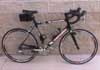
As a few people have suggested, you really may just need 1-2 months of riding this bike to get used to how it feels and handles. Give it time and try not to get discouraged yet. It looks like a great bike and your position looks quite reasonable. A road bike like this is supposed to handle very differently from what you've been riding. It is supposed to handle nimbly. But before you get used to it, that translates into squirrely. After you get used to it, it feels stable but quick. Once you get to the point where the bike feels stable and you can handle it with confidence, then you may still have to tweak your riding position.
P.S. In a previous post I mentioned headset adjustment. If that is off it will affect the steering and needs to be fixed. Did the LBS ride the bike after replacing the fork? Do you have an experience road-biker friend who would give it a spin to make sure the bike is riding properly?
Welcome guest, is this your first visit? Click the "Create Account" button now to join.


Results 31 to 45 of 61
-
07-29-2006, 07:54 PM #31
 Don't whine
- Join Date
- Apr 2006
- Location
- I'm the only one allowed to whine
- Posts
- 10,557
To disable ads, please log-in.
Y'know Mimi, that looks pretty dang good. How it looks is certainly not related to how it feels, but it doesn't look terrible.
Have you read any of Andy Pruitt's book? He goes over specific complaints and how to adjust your bike relative to the complaints vs. how a bike shop sets up an "ideal" bike.
Today I loved a 50cm Jamis, when technically I should've been on a 53cm. But it was perfect for my neck problems and how they relate to my comfortable position on a bike.
What looks good for a person with measurements like you might not be good for the real you.
By the way: NICE knickers!!!!!!"If Americans want to live the American Dream, they should go to Denmark." - Richard Wilkinson
-
07-30-2006, 02:51 AM #32
Grease Monkey
- Join Date
- Jan 2006
- Location
- Massachusetts
- Posts
- 2,556
Oil is good, grease is better.
2007 Peter Mooney w/S&S couplers/Terry Butterfly
1993 Bridgestone MB-3/Avocet O2 Air 40W
1980 Columbus Frame with 1970 Campy parts
1954 Raleigh 3-speed/Brooks B72
-
07-30-2006, 03:25 AM #33
Registered User
- Join Date
- Feb 2006
- Location
- San Antonio, TX
- Posts
- 2,024
Your position looks a lot better than in the images you sent me before you had the fork replaced. By choosing to go the route of a higher and shorter stem, vs a longer top tube, you do expect the bike to be more squirelly, but as others have said, it may take getting used to since you have been without this bike for a while. Will it ever ride like a bike with a shorter top tube and longer stem? No. But can you get comfortable riding it? Probably. I personally don't like to ride a bike with a stem less than 9 cm (with handlebars level with the saddle), which is why I ride a terry with a short top tube and 24" front wheel. But you said you don't want to go that route, so that means you have to put up with a less stable bike. What I think you still don't understand, is that there are unique problems associated with building small framed bikes, and everyone has to choose which solution offers the most advantages and least disadvantages, *to them*. For example, a small 24" front wheel allows you to get a properly sized top tube (i.e. a top tube that is proportional to the seat tube in bikes sized <52cm) so you can use a normal stem (9-14 cm), and normal seat tube angles and a normal head angle, which means you can achieve proper balance over the bike, as well as good handling. Another solution is to build the bikes with the angles needed for the desired handling, but then have toe clip overlap (this can happen with 650c as well as 700c wheels). I know a lot of women for whom this is acceptable, especially racers that always turn with their bodies, but it means needing to be extra careful when turning at low speeds. A third solution common in the wsd line is to use a steep seat tube angle to shorten the top tube, but then you need to move your saddle further back, lengthening it again, and sometimes you can't move it back far enough, so you end up with a poor position. A fourth solution is increasing the fork rake to push the front wheel away from the pedal, but then the fork trail is too high and the bike becomes too stable, i.e. its hard to get it to turn. Again, if you are always turning with your body at high speed you may not matter, but when I test ride bikes with too much trail I feel like I am driving a mach truck. So for *me* the best solution was a 24" front wheel. It seems that carrying one extra tube is a small price to pay for a bike that fits and handles well. You chose to go with a bike with a longish top tube and steep seat tube angle. That is now causing 2 problems. To get a comfortable reach they made your handlbars unusually high (aren't they at 1-2 inches higher than your saddle now?) and your stem unusually short. So you can sit on the bike now comfortably. But, when you try to ride the bike, the handling is quick due to the short high stem, and your hands hurt, perhaps due to poor balance over the bike. Do you know if they set your saddle position to put your knee over the pedal spindle, or to reach the bars. If they moved it too far forward to shorten the reach, you could have too much weight over the front of the bike, leading to hand pain. You could try pushing the saddle further back, just little bit, say 5 mm to see if it helps with the hand pain. While this will make the reach longer, it may improve your balance over the bike. This is another reason I personally like a bike with a short top tube and slack seat tube angle. It lets me get better balance over the bike, which is critical for good handling.
Hand pain means your hands are bearing too much weight, so you need to find out way. Is hand pain still the problem, or is poor handling now your biggest concern with the bike?
You asked why they didn't use the serotta fit system on you. I would guess its because they did a 'retro-fit' vs a new bike fitting. If they were going to sell you a new bike, they would have used the serotta system to determine what frames gave you the best options, but when you bring them a bike you already have, they have to just work with it. Also, be aware that especially reach is *very personal*. You can't simply pay a professional and expect that they will know what is going to work for you body, all they can do is put you in a range that lets you accomplish your stated goals. The fit for a triathelete wanting a super aero positon is not the same as a recreational rider that wants a mix of comfort and effeciency. When I was fit for my custom bike ( that was later stolen ) , I used a fit stem. The fitter determines the proper cock-pit size, i.e. sets you up with the proper saddle height and fore-aft position for effeceient pedaling, then sets the reach at something reasonable for your body and goals using a fit stem, a highly adjustable stem. Then you go ride the bike for a while and determine the exact stem length and height before the final stem is made.
If I were you, I would check the headset as recommended, put 100 miles on the bike, and then if you hands still hurt try pushing the saddle back 5mm (or if the pain is unbearable push it back sooner). But otherwise make changes slowly or you can't assess if they help or not. I would say if after 1000 miles you still weren't comfy on the bike (i.e. stable and free of hand pain) sell it and get that serotta fit before you make your next purchase. This doesn't mean you need to go custom, but you can't just buy a bike based on seat tube length, you need to look at top tube length, seat tube angle and head tube angle. Then before you buy, test ride different bikes and note the features of the geometry that work best for you, and then purchase one like that. For example, I know that I prefer bikes with 73 degree seat tube angles, 72 head tube angles, 48-49 cm top tubes, and 10-9 cm stems, with bars set level to my saddle. I only learned this after comparing measurements on bikes that worked for me in the past, vs bikes that didn't. You need to take personal responsibility for bike fitting. Yes, you can consult experts, but ultimately its your body, your choice.
-
07-30-2006, 07:30 AM #34
Don't whine
- Join Date
- Apr 2006
- Location
- I'm the only one allowed to whine
- Posts
- 10,557
Mimi-
Serotta fits at Sammammish Valley Cycle (eastside) are $200. If you get the fit before buying a bike from them the cost of the fit is deducted from the purchase price of your new bike. They sell mainly Bianchi."If Americans want to live the American Dream, they should go to Denmark." - Richard Wilkinson
-
07-30-2006, 08:02 AM #35
I like bikes
- Join Date
- Apr 2006
- Location
- Seattle
- Posts
- 8,548
Triskelion, thanks again for your long and thoughtful response. I think what bothers me most is not the squirrellyness, but the pain. Pain on a short ride
translates into SERIOUS pain on a longer one. I will take it all with a grain of salt and ride the bike for 200 miles before i make a decision because a dozen wise women on this forum suggest that this is best.
The thing about the 2 different sized wheels is this:
Human beings of all ages, from tiny tots to giant men can ride bikes with 2 wheels both the same size. What is so different about petite women that we can't? Why must petite women (argueably the most perfectly proportioned humans ) be singled out as the only humans that MUST have a bike with 2 different sized wheels?
I find the name of the Terry Symmetry rather ironic myself.
As for toes touching the front wheel, I have probably had that with every bike i've ever owned and it's not a big problem to me. It's something you get used to. That goes right along with getting grease on my thighs and remembering not to brake too hard with the front wheel.
The biggest thing for me that i am going from a fairly comfortable hybrid with straight handlebars and crummy gearing to this great Bianchi which sings up hills and can charge across the flats but has these silly handlebars that really seem to be situated in the wrong place.
I really appreciate all the time that folks have given to this dilemma and I hope that I can return the favor often!
-
07-30-2006, 08:08 AM #36
Queen of All I Survey
- Join Date
- Jun 2006
- Posts
- 2,506
Does the tilt on her handlebars look too extreme to anybody else, or is it just me?
-
07-30-2006, 09:17 AM #37
Registered User
- Join Date
- May 2006
- Posts
- 254
My handlebars are tilted like that - bike shop did it when I took it back to see what could be done for neck pain.
-
07-30-2006, 09:43 AM #38
I like bikes
- Join Date
- Apr 2006
- Location
- Seattle
- Posts
- 8,548
Yeah, she's messed with the handlebars A LOT (the bike fit lady)
-
07-30-2006, 12:38 PM #39
Registered User
- Join Date
- Sep 2001
- Location
- Lakewood, Co
- Posts
- 1,061
My fitter charged $150, 2 years ago, for my refit. she checked my flexibility, spent a lot of time talking to me about my goals and type of riding.
However, even if you didn't pay for the fit she is trained by Serotta and is using the Serotta philosophy of fitting.
One tip from the Andy Pruitt book, on the hoods "your wrist should be in a neutral, handshake position as much as possible. If your wrist angles toward the thumb or little finger, you'll experience numbing nerve pressure"
In the picture your hands look like they're angling toward your thumbs. If you ride that way it could be the cause of your problem.
If you kept the same handlebars were they the right size? Also, was the new fork the same as the original?
Your position looks good, better than a lot of riders I see, you have a nice flat back, flat shoulders, not to stretched.
Andy Pruitt says reach is hard to dial in for any fitter because it is so personal, so I still say give it some time before you make any changes.
-
07-30-2006, 12:52 PM #40
I like bikes
- Join Date
- Apr 2006
- Location
- Seattle
- Posts
- 8,548
Oh, Kathi, i PAID for the fit Originally Posted by Kathi

thanks for the observation about where my wrists are bending. We went to a bike shop today and i sat on two WSG bikes (one was a specialized
the other a trek) and DH said i looked better on the Bianchi when I sat on the Specialized... (he wasn't watching when i climbed on to the trek)
I think my handlebars are too small. They are 36's and i would fit a 38... but i was afraid to Spend MORE $$$$$
Will do 20-25 miles on it today with DH at my side. He has a good critical eye.
Thanks Kathi, Knotted, SouthernBell and FarrelCollie!
-
07-30-2006, 01:33 PM #41
"Ride lots!"
- Join Date
- Oct 2002
- Location
- San Francisco Bay Area
- Posts
- 9,324
An Interesting Article on Bike Fit
http://rivbike.com/html/rr_comfposition.html
Personally I think you look too stretched out in the photo.
V.
-
07-30-2006, 07:33 PM #42
I like bikes
- Join Date
- Apr 2006
- Location
- Seattle
- Posts
- 8,548
Veronica, i took that very photo to the fitter, that very one. I said this looks comfy. she said, no; his back isn't relaxed. your back looks nicer than his!
DH and I rode to Kent where my mother lives and back tonight; 26 miles all pretty flat (we started at the base of the hill)
He is thrilled with how I am doing with the bianchi, he gave me a lot of the same advice you guys did.
I noticed that my hands do NOT hurt as much!! I kept moving the hands around (sometimes they got tingly) and even went into the drops a little.
I even pulled out my waterbottle and took a drink without stopping!
It was a fun ride. Now he wants to take me on some hills (eeep)
Thank you all for your patience and good advice. I have a lot more hope today than I had earlier..
-
07-31-2006, 04:16 AM #43
Registered User
- Join Date
- Feb 2006
- Location
- San Antonio, TX
- Posts
- 2,024
That is TERRIFIC that you had a good ride yesterday!!!!!!!!!!! So perhaps the last round of changes did do the trick, but now you just need some time on the bike. Yes, moving your hands around the bars a lot is very important, as you know that is one of the advantages of drop bars. As is trying to keep your body RELAXED on the bike. Gripping the bars with all your might in a rigid postion will make anybody's hands ache, no matter how good the fit. But, 36 cm is quite narrow. To know the correct size bar, you should ask your husband measure your shoulder distance (didn't the fitter do this???). But if the bars are too narrow, it shouldn't bother your hands, but your upper back since your shoulder blades end up compressed, and sometimes in can effect your breathing since your chest also can be compressed. On the other hand, narrow bars are more aero so if you are comfortable with the width I wouldn't worry about it. New bars aren't too expensive, and its not hard to change the bars out yourself. Again though, I think the idea of making gradual small changes is best, and unless something really hurts, wait a couple hundred miles before doing anything else. For now, just ENJOY HER!!!!!!!!!!!!!
-
07-31-2006, 01:10 PM #44
Sue
- Join Date
- Jun 2005
- Location
- Illinois
- Posts
- 3,151
moustache handlebars
http://harriscyclery.net/itemdetails.cfm?ID=416
These are the bars that tempt me away from my flat bars (drops make me cranky).
-
08-01-2006, 06:25 AM #45
Don't whine
- Join Date
- Apr 2006
- Location
- I'm the only one allowed to whine
- Posts
- 10,557
I'm being seriously tempted by these, since they are cheaper than the bar-ends I like; and changing my bike to drops would be so horridly expensive.
http://harriscyclery.net/itemdetails...gId=39&id=2109"If Americans want to live the American Dream, they should go to Denmark." - Richard Wilkinson